
UK Mini Golf
UK Mini Golf Guides
Game Basics
UK Cities
Indoor Guide
City Guide 1
City Guide 2
City Shortlist
Related Games
Classroom Maths
How to Play
Mini Golf and Crazy Golf
Mini Golf and Crazy Golf at a Glance
Mini golf is a short-form putting game played on a course of individual holes. In the UK, venues range from simple putting layouts to imaginative attractions with themed features. A round can suit a quick recreational visit or a longer group activity, depending on the course. Basic equipment and terminology clarify venue descriptions.
Equipment and Aim
A typical round needs a putter, a golf ball, a hole and a way to record scores. The putter is used to move the ball along the playing surface; unlike full-sized golf, players generally do not carry a set of clubs. Venues usually provide the equipment, although the exact ball or putter design can vary between courses.
At each hole, the aim is to guide the ball into the cup in as few strokes as possible. A stroke is counted when you make a putting attempt, and the number taken to finish the hole is recorded on a scorecard or in a digital scoring method. Players repeat the process at each hole, then compare their recorded totals: the lower overall score represents fewer strokes across the round.
How the Terms Are Used
In everyday UK usage, “mini golf” and “crazy golf” often refer to the same kind of short putting activity. A venue may use either name in its signage or booking information, so the label alone does not always tell you what the course looks like.
Some people use “crazy golf” for courses with conspicuous obstacles or themed features, while “mini golf” can serve as a broader description of compact putting games. These are tendencies rather than fixed national definitions: course design and local usage can differ, and the terms may overlap. When comparing UK mini golf options, look at the venue’s own course description as well as its name. The terminology distinction is useful, but the layout itself gives the clearest indication of the experience on offer.

How Mini Golf and Crazy Golf Differ
In the UK, mini golf and crazy golf are often used as interchangeable names for a round on a small putting course. The wording on a venue sign or booking page may reflect local convention rather than a formal distinction. Course design can still vary considerably, from simple lanes to elaborate themed settings. Looking at the layout and obstacles gives a clearer picture of the experience than relying on the name alone.
Course Layouts and Terminology
Conventional miniature golf layouts often use compact lanes with defined edges, gentle slopes and a clear route from tee area to cup. Some courses keep each hole relatively direct, making the line and pace of a putt the main challenge.
Other designs add obstacles or build a theme around the course. A windmill, bridge, tunnel or raised ramp can shape the route, while decorative features may make the setting feel like an adventure. These features are common examples, not a checklist that separates one game from another.
| Criterion | Conventional miniature golf layout | Themed or playful design |
|---|---|---|
| Layout | Defined lanes, often straight or gently curved, lead towards a cup. | Routes may bend around scenery or pass through structures. |
| Obstacles | Edges, slopes and simple barriers can guide or redirect the ball. | Windmills, tunnels, bridges or ramps may interrupt the direct line. |
| Visual setting | Course features may be functional, with limited decorative detail. | Landscaping, props or a story-led theme can shape the hole’s appearance. |
| Common naming | “Miniature golf” and “mini golf” are frequent labels. | “Crazy golf” or “adventure golf” may be used, depending on the venue. |
Across UK mini golf venues, names do not map neatly onto separate rulebooks or fixed course types. A venue called crazy golf may have straightforward putting lanes, while a mini golf course may include elaborate obstacles.
For a useful comparison, check the actual hole designs: note whether the route is direct, how obstacles affect the line, and how much of the setting is themed. That description is more precise than treating the labels as universal categories.
Definitions and Common Misconceptions
A common misconception is that “mini golf” always means a plain course and “crazy golf” always means a themed one. In practice, the names overlap, and a venue may choose either label for a course with similar putting play. Obstacles, scenery and hole shapes depend on the individual course; none is guaranteed by the name.
Local usage can influence what a listing calls its activity, so the label alone may not tell you whether a course has tunnels, ramps or decorative themes. Treat those as details to confirm in the venue’s course description, rather than as part of a universal definition. The dedicated terminology explainer, “How Mini Golf and Crazy Golf Differ”, covers definitions, formats and common misconceptions in more detail.
Crazy Golf Across UK Cities
The UK mini golf experience varies with the city and the area you plan to visit. A city guide can help narrow the geography before you compare individual location options. Use the city names below to organise a search around your starting point, travel plans and group’s needs. Treat each guide as orientation rather than a live record of venues.
City Guide Coverage
The city guides cover twelve destinations across the UK, giving readers a consistent starting point for comparing location options. Each name can help frame the first stage of planning.
- London and Glasgow: Use these guides to set a city-level search area, then compare which districts fit your starting point and the travel time your group can allow.
- Bristol and Manchester: Consider which parts of each city suit your plans, and note how your preferred meeting point affects the locations you want to compare.
- Nottingham and Birmingham: Start with the city names, then organise possible locations by the area you expect to visit and how your group will reach it.
- Newcastle and Leeds: Use the guides to think through your preferred part of the city and the journey involved before comparing specific options separately.
- Liverpool and Cardiff: Treat each guide as a way to narrow the broad search area around your plans, rather than as a complete list of places to play.
- Belfast and Edinburgh: Begin with the relevant city, then decide which location factors matter to your group before checking any individual option.
Together, the guides span London, Glasgow, Bristol, Manchester, Nottingham, Birmingham, Newcastle, Leeds, Liverpool, Cardiff, Belfast and Edinburgh. Their role is to help structure comparisons, not to confirm that a particular place is open or currently available.
Using the City Guides
Choose the city that matches your plans, then use its guide to frame the location options you want to compare. For example, identify a convenient part of the city, your likely starting point and how far your group is prepared to travel. These details make it easier to assess options on consistent terms, whether you are planning a local outing or meeting people from different areas. The city pages are not venue directories or current listings, so check individual venues separately for their present location, availability and arrangements before making plans.
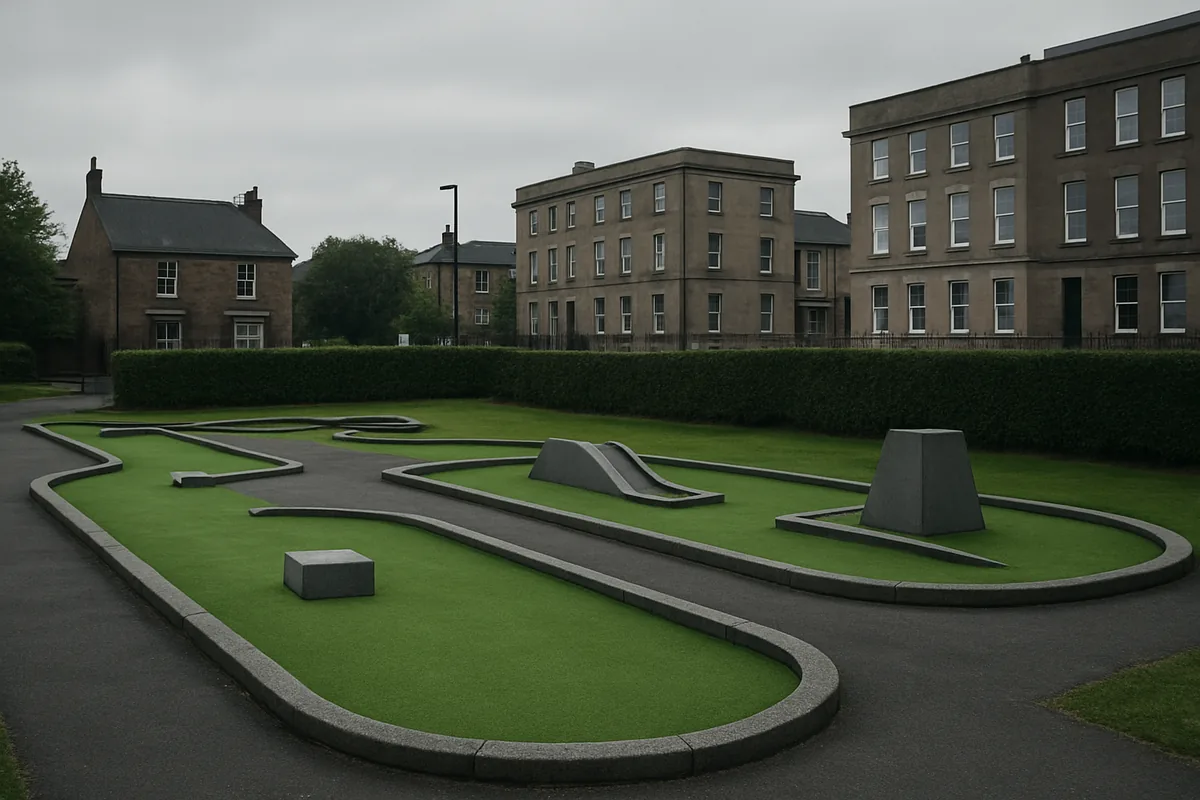
Choosing an Indoor Crazy Golf Venue
An indoor course can suit a rainy-day outing, a family visit or a group celebration, but venues differ in layout and facilities. Compare the features that affect whether the visit will work for your party, rather than relying on photographs alone. The indoor selection guide provides a starting point for assessing options. Check practical details with the venue before settling on a plan, since arrangements and access information can change.
Venue Comparison Criteria
A useful comparison starts with the course itself and the needs of the people playing. For indoor mini golf in the UK, look for details that help you judge the visit before you book.
- Course layout: Check how many holes are described, whether the route is compact or spread across several areas, and whether photographs show the playing space clearly.
- Accessibility information: Look for specific details about step-free entry, route surfaces, doorways and accessible facilities; these help you identify questions to ask about individual access needs.
- Group size: Check whether the venue explains how it accommodates larger parties, including birthday groups or several families, and whether play is organised in smaller groups.
- Age suitability: Find any stated minimum ages, child supervision guidance or information about course difficulty; these details help assess whether younger players can take part comfortably.
- Venue details: Useful descriptions include the location within a building, available facilities, approximate visit duration and booking arrangements, giving you a clearer picture of the overall outing.
These details indicate suitability, not a guarantee that every player’s requirements will be met. If an access feature, age limit or group arrangement matters to your plans, ask the venue to clarify that specific point.
Checking Current Arrangements
Use the indoor selection guide to compare the kinds of information venues provide, then check the details that matter for your planned visit. Opening arrangements, access details, age guidance, group policies and booking requirements can change, so older descriptions may not reflect the current position. Confirm current arrangements directly with the venue before travelling, especially if your party depends on a particular access feature or needs space for a larger group. Ask about the date and time you intend to visit, since availability and operating hours may differ across days.
UK Cities for a Crazy Golf Day Out
A city break built around mini golf can include time for food, shopping, museums or a live event as well as a round. London, Glasgow, Manchester, Bristol and Birmingham offer different travel patterns and city settings, so the best fit depends on where you are coming from and what else you want to do. Check journey connections and the locations of planned activities before settling on a day’s route. Treat the comparison below as a way to shape an outing, not as a ranking of courses.
Comparing Day-Out Cities
Start with the arrival station and the areas you want to visit: the five cities differ in scale, central layout and onward travel. Pair a round with nearby food, shopping or cultural activities to suit the length and pace of your day.
| City | Travel context | Activities to combine | Outing character |
|---|---|---|---|
| London | Several mainline terminals serve different parts of the city, so check which station is closest to your plans. | Build in time for museums, theatre, shopping or a walk along the South Bank. | A wide-ranging day with more time needed to move between districts. |
| Glasgow | Glasgow Central and Queen Street stations serve the city centre; your arrival station depends on your route. | Combine a round with galleries, city-centre shopping or a meal. | A central-city outing can bring several activities together without planning across a large number of districts. |
| Manchester | Piccadilly and Victoria are the principal central stations; check which one suits your arrival and onward route. | Consider food, shopping, museums or live entertainment as additional stops. | A varied urban day, with the Northern Quarter among the central areas to consider. |
| Bristol | Temple Meads is southeast of the central harbourside area, so allow for onward travel between them. | Pair a round with harbourside walks, food or time in the city centre. | A day that can mix central-city plans with a change of scene by the water. |
| Birmingham | New Street station is centrally placed, making it a useful starting point for city-centre plans. | Add shopping, canalside time, food or a cultural visit to the itinerary. | A practical choice for combining central activities in one city outing. |
For a family-friendly crazy golf day, leave enough time for travel between activities rather than filling every hour. Compare journey connections and the locations you plan to visit before choosing a city.
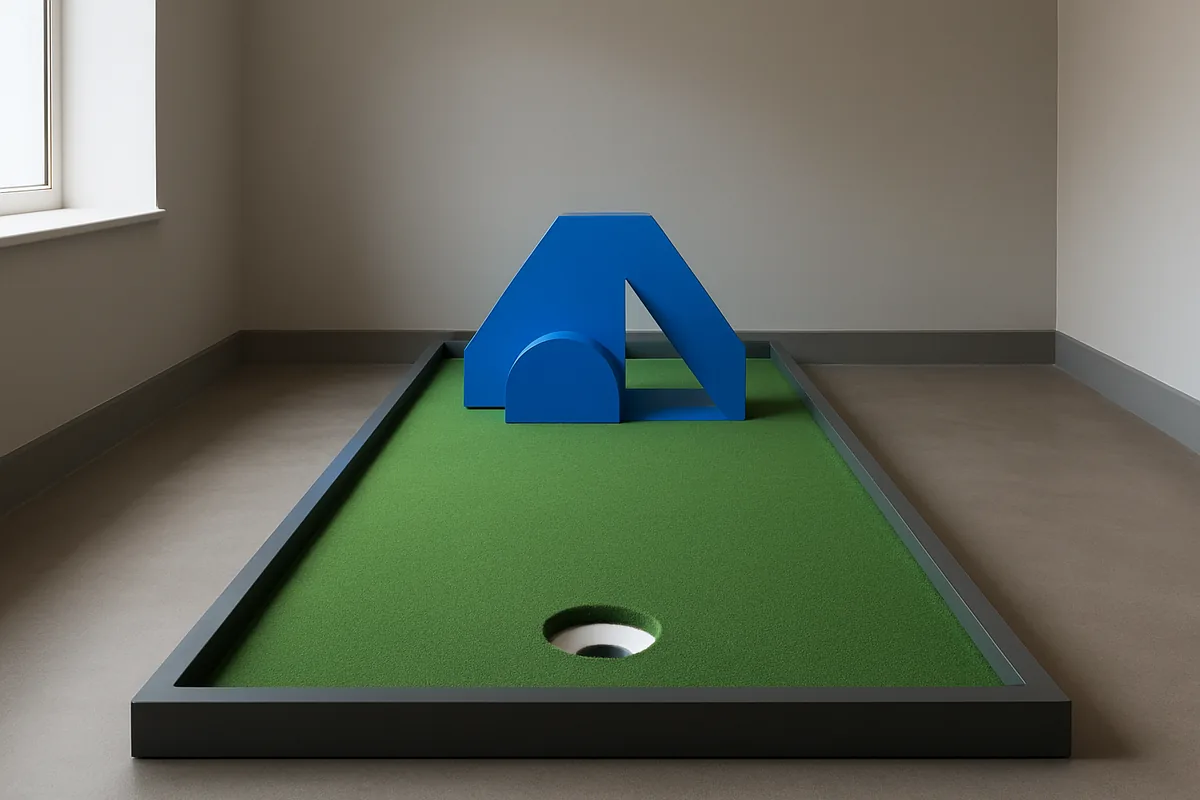
Mini Driver Golf and Related Games
Mini driver golf is a golf-style activity, but the name does not describe one fixed format across the UK. It can cover entertainment built around hitting a ball with a golf club, rather than putting around a miniature course. The equipment, playing area and targets depend on the activity offered. Knowing the distinction helps when comparing it with miniature golf or crazy golf.
What Mini Driver Golf Means
Mini driver golf can refer to golf-style entertainment in which players use a club to hit a ball towards a target. The basic action is a golf swing: the player addresses the ball, makes a controlled strike and aims for a landing area or target. The setting may be designed for short play and entertainment rather than a full-length golf course, but the exact layout depends on the format.
The term is not used consistently to identify one standard game. An activity described this way might focus on hitting accuracy, distance, target zones or a sequence of challenges. Clubs, balls, playing surfaces and scoring can vary, so the name alone does not tell you whether play uses a driving bay, a course, technology or another arrangement. Check the activity description for what players actually do.
This is different from assuming that “mini” means a miniature putting course. In golf-style entertainment, the emphasis is generally on striking the ball with a club and directing it towards a target; miniature golf centres on putting through a compact course. For a fuller explanation of the terminology and how formats differ, see “How Mini Golf and Crazy Golf Differ: Course Layouts and Terminology”.
How It Differs from Miniature Golf
Mini driver golf is generally golf-style hitting, while miniature golf is played by putting a ball along a short course towards a hole. In a golf-style activity, players make a fuller swing with a club and the ball may travel across a larger target area. In miniature golf, the putter is used for a lower, controlled stroke over a short distance, often around course features.
The difference is the central action, not simply the scale of the equipment or venue. A golf-style game may measure successful hits against targets; a miniature course usually counts strokes taken to complete each hole. Names and formats can overlap in casual use, so the label is not always enough to identify the activity. “How Mini Golf and Crazy Golf Differ: Course Layouts and Terminology” explains the terminology, basic formats and distinctions.
Maths Mini Golf for Classrooms
A simple mini golf course made from classroom objects can turn a short putting activity into practical maths practice. Each hole gives pupils a reason to count strokes, add scores, measure distances and record results. A paper scorecard makes individual attempts easy to compare across several holes. The activity can be adjusted to suit available space, equipment and the level of calculation being practised.
Skills a Classroom Course Can Practise
A few short holes can connect putting with familiar number work. Give each player a scorecard and use the same course layout for every round.
- Count strokes: Players add one mark each time they tap the ball, then count the marks when it reaches the cup to find that hole’s score.
- Add scores: After three holes with scores of 2, 4 and 3, a player adds them to calculate a round total of 9 strokes.
- Measure distances: Before play, measure the route from a starting line to a cup with a metre ruler; compare a 1-metre putt with a 2-metre putt.
- Record results: Players enter each hole number and stroke count in a table, creating a clear record to check against their final total.
- Compare totals: Once everyone has played the same holes, compare scorecard totals; a difference such as 12 versus 15 means three strokes separate the results.
- Check calculations: Players can add the hole scores again and compare the sum with their recorded total, spotting an addition error before sharing results.
Keep the course to a few holes when practising one skill, or use a longer scorecard to combine all four. Repeated measurements and recorded scores give each round a consistent set of figures to work with.
Setup and Classroom Adjustments
Choose a clear floor area and mark a starting point and cup for each hole; paper cups, books as barriers and a soft ball make a simple course. Measure each route in metres, then provide a scorecard with columns for hole, strokes and total. Players can take turns putting, count every stroke and add their scores after each hole. The Maths Mini Golf for Classrooms guide covers setup, steps and adjustments. Shorten the measured routes for easier putting, add a barrier to create a longer route, or provide a pre-drawn results table for pupils who need more structure.
How to Play a Round
A mini golf round is a sequence of individual holes, with players taking turns to putt a ball toward each cup. Each putt counts as a stroke, and the score records how many attempts a player needs to finish a hole. The basic turn-and-score rhythm is straightforward, though a venue may set additional rules. The sequence shows how a game proceeds from the first tee-off to the final score.
Turns, Strokes and Hole Completion
At the first hole, players establish an order, often by agreement or a quick choice. Each player takes a turn, placing the ball at the marked starting point and making a putt toward the cup. The aim is to guide the ball through the lane and into the hole with controlled strokes.
Count every putt as one stroke, including the shot that sends the ball into the cup. After a turn, the next player takes their shot; players continue in turn until each ball has reached the hole. Record each person’s strokes for that hole before moving to the next one. A simple scorecard with one entry per player per hole helps prevent totals from being mixed up.
When a ball drops into the cup, that player has completed the hole and takes no further shots there. Add the strokes for all completed holes to compare round totals; fewer strokes mean a lower score. If you are new to mini golf, focus first on taking one turn at a time and recording the count immediately after each hole. The practical guide, “How to Play a Round,” provides the full play sequence.
Rules That Can Vary
Course-specific rules can change how a round proceeds. Venue instructions may explain where to restart if a ball leaves the playing lane, how to handle an obstacle, or whether a maximum stroke count applies. Check the posted directions before the first hole rather than assuming every course uses identical procedures.
The practical guide, “How to Play a Round,” covers setup, the play sequence and common errors, such as forgetting to record a stroke or moving a ball without permission. Following the course’s own instructions keeps turns and scores clear, even when a familiar layout has a local variation.
Who This Guide Is For
People looking for UK mini golf may need different information depending on whether they are choosing a first game, organising a group outing or comparing how the formats differ. The city guidance helps narrow a search by destination, while topic guidance covers playing basics, classroom activities and game types. Families can use the venue and city material to consider options suited to a shared day out. Teachers and curious players can go straight to the sections that match their practical questions.
Readers and Use Cases
First-time players can begin with the playing-basics guidance, then use the terminology and format explanations to set expectations for a round. The city guides provide a way to find places to play when a destination is already in mind; the venue-selection material is more relevant when the main question is what kind of setting to choose.
Families planning a shared outing can compare city options and look for family-friendly crazy golf suited to different ages and interests. The indoor and outdoor venue guidance helps when weather, location or the feel of the activity matters, while the course-format material can help set expectations before choosing a visit.
Groups organising a city outing can use the city comparisons to shortlist destinations, then consult the relevant city guide for local choices. This is useful for a birthday meet-up, an evening with friends or a date-night plan where a round of golf is one activity among several.
Teachers can turn to the maths mini golf guidance for classroom activity ideas, including ways to connect putting with counting and simple measurement. Readers comparing mini golf, crazy golf and mini driver golf can use the format-specific explanations to identify which type best fits their interests, without assuming the names describe identical games.
Using the City and Topic Guides
Different questions about UK mini golf call for different kinds of information. The terminology guide explains how mini golf and crazy golf are used, while city pages focus on places to play in particular locations. Practical guides address specific needs, from choosing an indoor activity to using mini golf in a classroom. Matching the question to the guide makes it easier to find relevant details without treating every topic as a venue listing.
Choosing the Right Guide
Use the terminology guide for definitions of terms such as mini golf, crazy golf and adventure golf. It answers questions about names and definitions; it is not the guide for finding a course in a particular town. If your main question is where to play, use the city pages to compare location-based options and narrow your search to a place you can visit.
Choose a practical guide when the question is about a particular format or use. The indoor venue guide is relevant when you are comparing indoor options, while the classroom guide is for teachers planning maths activities with a mini golf course. For questions about turns, strokes or completing a hole, use the guide to playing a round. These distinctions help you move from a general question to the right detail: definitions, locations, indoor selection, classroom use or the basics of a round.
Changing Venue Information
Venue details and operating arrangements can change after information is published. Opening days, session times, prices, course availability and access arrangements may differ between venues and may be updated at short notice. The information in this guide is not a set of verified venue listings, so a city page should not be treated as confirmation that a particular course is open or operating as described.
Check current arrangements directly with the venue before making plans. Confirm the details that matter for your visit, such as the date and time of play, whether advance booking is needed, and any current access or age conditions.